Showing posts with label shopping. Show all posts

Monday, 16 December 2013

7 Signs that you are suffering from Gift Creep


OK, so you've finished your Christmas shopping . or have you? 

Will you be tempted to buy your friend that 'little extra'? Or find you've bought more presents than you needed and add to the relatives' pile?


Can't stop at one gift per person? 
You may be suffering from gift creep.


People rarely seem to give each other just one present these days. We hedge our bets and give two, or even three, gifts in the hope that one of them will hit the right note.

More than a third (35%) of people say they're disappointed with how the gifts they've bought look when wrapped up and fall victim to 'gift creep', splashing out on last-minute additions, according to research by Currys & PC World.

And nearly a quarter (23%) of people in their survey reported worrying that the other person has spent more, which can lead to nipping out for that little 'extra something'.  

It seems some of us just don't know when to stop shopping!

I've called this behavioural phenomenon ‘gift creep’ and this week, as we get closer to Christmas, is the danger period when we can fall victim to it and start piling on the presents. And that can really add to the cost of Christmas.

Here are my 7 signs you are suffering from Gift Creep:

  
   1.   You’ve finished your Christmas shopping but still buy little ‘extras’ every time you go out

   2.   You worry someone won’t like what you’ve bought them, so you add another gift (like some luxury chocolates) on top to soften the effect

   3.   Before someone visits at Christmas you look around to see if there’s anything else you could give them

   4.   After wrapping all your gifts you feel anxious that the size and number of parcels looks a bit on the small side

   5.   You lie awake at night totting up how much you’ve spent on people - then try to even up the numbers so as not to appear stingy

  6.   You’re all spent out …. but can’t resist those last minute stocking fillers at the till

   7.   You buy a gift for someone, forgetting you've already bought them something, and end up giving them both

So if you've finished, try to draw a line under the shopping and say 'enough's enough'! 

Otherwise, gift creep creeps up year-on-year until it reaches unmanageable, and un-financeable, levels.


To help present buyers, get their presents right this Christmas, Currys & PC World has launched a special Gift List service. The online tool makes getting the right gift easy and, as well as helping you pick the best presents, every day someone will win their entire Gift list throughout the festive period.


Wednesday, 13 November 2013

What's your Style Identity? (and should you care?)….

A pair of turquoise PVC shorts. A neon jumpsuit. A hand-knitted corset. Just some of the drastic style boobs that three friends owned up to when surveyed recently. And who hasn’t bought something to wear and, on getting it home, found that it's less of a ‘Wow” and more of a “Why???”!

That’s why I was thrilled to get involved in a project with TKMaxx and The Times T2 to help people discover their Style Identity. It's just launched today. 

When we're muddled about what suits us, confused about the style that matches our personality, we risk making expensive mistakes and creating a look that misses the mark. It's not enough to rip a style from the catwalk, magazine page or shop window and simply put it on. That look was designed for someone with a different body, a different personality and a lifestyle that’s nothing like yours. So it’s unlikely to work. It might scream, “This isn’t me”. Worse still, it could hide the real you and leave you sartorially dissatisfied, starved of self-expression. That's why dressing from the inside out, from your identity and your unique personality, is so vital.

Research shows that when we change how we look, the change isn’t purely physical. 

Changing how we look changes how we behave. 
It changes how others react to us (positively and negatively). 
It can even change how we think and feel. 

So pulling a dress off the wardrobe or shop rail is no benign act. It could have a knock-on effect for your whole day. Or even your life. I’m digging deep into the psychology behind this in my new book about fashion psychology, ‘Mind What You Wear’. It'll feature the TKMaxx/Times Style Identity questionnaire as a way for people to really get ‘behind the seams’ of their own identity. 

Romance, Retro, Glamour, Bold or Street Chic. What's your style identity?
If you haven’t already checked out yours, go over and do the Style Identity questionnaire. It only takes a few minutes. And don’t forget to share your results with your friends. 

I've created five identities based on how an individual's personality type and lifestyle translates into clothing. The identities are Romance, Retro, Glamour, Bold and Street Chic. Your answers to the questions will reveal which you are. You may think you know. Or you might be in for a surprise. Of course most of us are a mix of types, so your signature and your accent style will emerge from the test. It’s worth giving it a go. When you know what your style is you feel more at one with your image, and those shopping expeditions are made a whole lot easier.

If discovering your identity sparks off some style soul-searching, that’s no bad thing. 
TK Maxx has a fashion philosophy that’s all about being a little bit braver. They want people to ‘put their brave glasses on’. To say ‘maybe’ to the unthinkable. I love their approach because it chimes so well with the Do Something Different movement that I co-founded and passionately believe in. When applied to fashion this all adds up to more brazen experimentation, more pushing at the boudaries and more venturing across the familiar line.


It’s easy to get into a wardrobe rut because it creeps up on us without us knowing. You suddenly find yourself playing it so safe that you're not expressing your true identity. You  start to disappear in a sea of beige. Now's the time to change all that.
TK Maxx say that the only wrong is not trying it on. 
And that’s as true of life as it is of clothing!


Sunday, 20 October 2013

Is clothes shopping a costly mechanism for maintaining self-esteem?


     Remember the first time you went out and bought yourself something to wear? With your own money and without your mum in tow? For many people this was a rite of passage from childhood to  adolescence. The time when possessions started to act as an extension of the self. When the clothes we wore were critical to the development of our identity. It's no coincidence that materialism peaks at mid-adolescence, just when self-esteem starts to take a bit of a dip. And fashion psychology tells us that, for many, clothes shopping becomes a lifelong (and costly) mechanism for maintaining a reasonable level of self-esteem.
     In the course of a lifetime it’s estimated that women in the western world shell out an average of £84,000 (or $107,000) on clothes. If a woman’s clothes shopping years extend roughly from age 16 up to 86 years (although more is spent in the younger than the older years) that’s 70 years, or 3640 weeks, of clothes-buying. And that works out at £23.07 per week. Every single week. It’s a frightening sum. And yet:

  • A survey I carried out revealed that 82% of people have at least one item in their wardrobe that they have never ever worn. 
  • I also found that one in ten people have at least ten unworn items still with the label on.
  • A US survey reported on EliteDaily.com said that 60% of women say they still struggle to find something they want to wear to work or on a night out
     Contrast this with Marie Curie, who got married in her navy dress and wore it every single day afterwards, because it wouldn’t show the stains from working in the lab.  Nowadays many women put effort into finding the perfect garment to solve her current wardrobe crisis. Or  current emotional crisis. And many modern woman are seduced into believing that each season must herald in at least one new dress, jacket, coat and pair of trousers. 
    But the secret of dressing well may lie in wearing what you’ve already got in your wardrobe. Reinterpreting those clothes in a stylish and individual way, without needing to add another item. In fact, having more clothes simply adds to the confusion and dilemma of dressing by creating option overload. And buying more simply leads to hedonic adaptation, as I have written about in an earlier fashion psychology blog.  
     Researchers know that our brains encode perceptual information in predictable ways. The brain groups together items that are similar and categorises each new experience according to how alike it is to a previous one. It is wired for sameness, so no wonder novelty feels so exciting. That's why simple changes like going a different way to work, rearranging the furniture or trying a new type of food can give the brain a stimulating prod, diverting it from the old well-trodden path and sending it down a new, excitingly different, pathway. 
     So next time you're tempted to make a 'quick fix' purchase take a step back. Ask yourself if you actually need something new. Or if just need some novelty, to give the sartorial part of your brain a jolt. If so, why not try the following with the clothes you already possess?
  • Mix unexpected fabrics and styles to create exciting contrasts; leather with chiffon, tweed and taffeta.
  • Forget dainty heels and mix the prettiness of a frock with socks and flat boots.
  • Soften the hard edges of leather by pairing a biker jacket with vintage lace or cashmere.
  • Try layering or mixing garments in unusual combinations. Wear one dress over another, layer two or more t-shirts, wear a vintage bra over a vest-top or a petticoat over a skirt.
  • Men’s clothes are often better tailored than women's; try a man’s jacket belted with a vintage brooch for a cool style. Or turn a large cotton man’s shirt into a shirt dress by elasticating the waist.
  • Reverse clothes, wear them upside down or inside out for a new quirky take on an old garment you’re bored with. Rip off and replace the buttons or tie dye the fabric.
  • Don't wear things in the way they were intended. A belt can be worn as a necklace. A table cloth transforms into a quirky wrap-around skirt. I have a scarf that’s actually the sleeve of a man’s jacket complete with paisley lining. The friend who made it also makes skirts by sewing lots of men’s patterned ties together. Sleeves sewn together can add up to a funky and unique skirt.
Upcycled outfit by Asli Jackson
  • Don't throw out old jumpers, use the sleeves to make cuffs, fingerless gloves or leg-warmers. 
  • Revive old trousers as shorts to be worn over funky tights, or unpick the seams and turn into a skirt.
  • Cut slashes in an old woollen jumper, hot wash it to seal the edges and create a lacy effect, wear over a contrasting colour t-shirt.
  • Take inspiration from artists, like Anu Tuominen who makes bunches of woolly gloves into a shawl, or a scarf from dozens of mis-matching colourful woollen socks.
  • Look out for workwear or old military or naval uniforms and make the most of their durable fabrics and stark simplicity.
  • Break every colour-matching rule. You will inject energy into any outfit if you STOP MATCHING EVERYTHING.
  • Look for recycled fashion labels like TRAIDremade who make an art and a business out of upcycling and transforming old garments into new.
  • Or From Somewhere who rescue discarded fabrics from the dustbins and floors of fashion rooms and turn them into beautiful clothes.

     It is sad to think that billions of tons of unwanted clothes get thrown away every year. And that millions of pounds worth of debts are racked up every year through people buying clothes they don't need with money they don't have. 
     So instead of shopping for new clothes why not use some of these creative ideas to save money and work on developing an individual style from the clothes under your nose.  Make your wardrobe work for you, instead of you working for your wardrobe.


Friday, 6 September 2013

Moments of Weakness: Five Impulse Spending Triggers


Do you know what your weak spot is? Is it the shoe section in Harvey Nicks or those racks of beauty products at the airport? Do you buy more food when you're hungry (who doesn't)? More clothes when you're stressed? More gifts when feeling guilty? More of anything-that-isn't-nailed-down when you're pre-menstrual and have just been paid?

People rarely buy stuff for utilitarian reasons. Buying is more often the result of mind-boggling marketing tricks, seductive store layouts and a whole host of biological, psychological and even evolutionary factors.  
Purchasing decisions aren't always made rationally
We aren't always in as much control as we'd like to be, as the growing number of people with credit card debts or compulsive shopping disorders will testify. And men and women shop differently, with more women inclined to spend on impulse.

Impulse buys are a buyer's curse and a seller's dream. 

A recent article on the excellent Huffington Post website has captured the Five Big Moments When You're Most Likely to Overspend

According to their writer Candace Braun, those moments of weakness are when:

You're Mindful of The Time:  A slogan that urged people to "spend a little time, enjoy C&D's lemonade," resulted in more people buying a drink, and paying 51% more for it (compared to a those who saw a sign that asked them to "spend a little money"). This 2008 study from Stanford University showed that  'spending time' feels more like buying an experience, not just handing over hard-earned cash. Slogans linked to time, like 'thank Crunchie it's Friday' work in the same way.
If the time seems right.....

You're Trying to Avoid The Crowds: You may feel super-organised shopping at 7 a.m. on a Wednesday, when Tesco is blissfully quiet, but your purse could take a bigger hit.  Being in a crowd makes us less likely to overspend, according to a Journal of Consumer Research study. We are more focused on getting out unscathed than on making another purchase.
I know you didn't come out to buy this, but here you are!
You've Got Money in Another Account: That offer of the £100 bonus for opening an extra account seems a no-brainer. However, a May 2013 study found that people tend to save more when they have just one place to deposit money Researchers say that with one account it's easier to keep track of how much is in there -- and how much you're spending. When we have multiple accounts, it's easy to spend from one while feeling reassured there's money in the other account too.
You've Got to Buy Something Embarrassing: To try and mask the embarrassing item in their basket, almost 80 percent of people will pile in unnecessary extras to divert the cashier's and other shoppers' attention, a Journal of Consumer Research study found. Online shopping could be the answer here!
Gift purchases are less guilt-ridden
You Need Some Retail Therapy: It's common to feel the urge to splurge when emotions are high or mood is low. My research has also shown that 75 percent of women are more likely to overspend or impulse buy when treating someone else. Feeling low can lead to us literally trying to buy happiness and buying gifts for those we care about can help us feel more connected to them, as we say in Sheconomics. Of course, buying for someone else doesn't induce as much guilt either when money is tight.
Thanks again to the Huffington Post for bringing these spending triggers to light, and for including Sheconomics in their article - it's always nice to reach out to our US readers - issues with money cross cultural boundaries and oceans too.


Sunday, 4 November 2012

Do you suffer from hedonic adaptation?


How many of the following statements would you agree with?
  • Most marriages start with a burst of joy that slowly fizzles out
    • The thrill of winning the lottery would wear off after a while
    • A larger salary wouldn’t make me much happier
    • Losing weight would only make life better temporarily
    • I have many possessions that I once thought were beautiful but don’t now
    • Most people stop noticing their partner’s good looks
    • I could achieve my dreams and still find I’m dissatisfied
    • There’s nothing as exciting as a new relationship
    If you answered Yes to more than two or three of these you may suffer from hedonic adaptation. 
    But, to be honest, most of us do.  
    Hedonic adaptation is simply when happiness wears off (cue Texas singing The thrill has gone). The way the excitement of that top job, windfall or new car fades with time. 
    Even winning the lottery produces only short-term ecstasy, for lottery winners are no happier 18 months after their win than non-winners. And I suspect there are many readers of this blog who have stuff in their wardrobes that they once thought was to-die-for that they now wouldn’t be seen dead in.

    Hedonic adaptation explains the tide of over-consumption that modern society is caught up in. If we didn’t ‘go off’ things, if last year’s handbag or winter coat thrilled us as much today as when we bought it, we wouldn’t be drooling over this year’s model. The exhilaration of acquisition gives buyers such a buzz that, like shopping junkies, they seek it out again and again. 
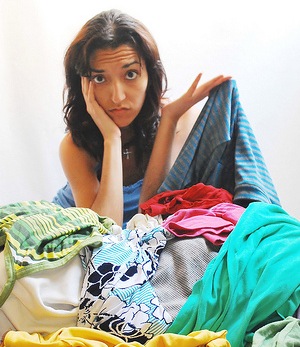
    How did I ever love this lot?
    We all know we should be content with less. We know that twenty pairs of shoes is more than enough for any bipedal creature. But the pull of the mall does, as I said in an earlier blog, threaten to make shopping zombies of us all.

    How can we stop this adaptation and prolong the pleasure of our purchases, or our priveleges? What can the field of fashion psychology tell us? Research about to be published in the Personality and Social Psychology Bulletin points to two key ways. Appreciation and variety. In their hedonic adaptation prevention model the authors say:
    Appreciation: Stop and appreciate every day what you have and you might be able to eek more excitement from it.
    Variety: Use it in different ways, to create more varied experiences, and the bliss could persist.

    Why? Because the brain habituates over time that we get bored with things*. The brain loves novelty and surprises, which is why the mantra I swear by, Do Something Differentis once again of huge relevance here.

    How? Here are my tips for preventing hedonic adaption and keeping the thrill alive:
    • Move stuff around so you continue to notice it.
    • Re-position your art or objects of desire in the home every so often so they have new impact.
    • Store winter clothes away in summer, and vice versa, and experience the newness of them when you get them out again months later.
    • Ditto with young kids’ toys. Divide them into four storage containers. Let them play with one set at a time while the others are hidden. Rotate on a weekly or monthly basis.
    •  Better still, stop buying toys and use a toy library or swap with friends. Babies habituate very quickly to stuff and love more novelty than even the most indulgent parent can afford.
    • Keep an appreciation or gratitude journal. This trick, from positive psychology, keeps reminding you of the good stuff in your life. It's shown to boost happiness as well as curbing the urge to go and buy more stuff.
    • Get excitement from experiences rather than from purchases. The effects are known to last longer and be more fulfilling. Very relevant at Christmas.
    • Use your old stuff in new ways, learn how to restyle your old clothes or swap with friends.
    • Rent, rather than buy, an outfit for a special occasion.
    • Do something different as often as possible in your life.  You’ll come to see that it’s all about what you do, not what you have.


    ·      * From the paper by Sheldon et al, University of Missouri:
    "By definition, adaptation occurs only in response to constant or repeated stimuli, not to dynamically varying ones. Thoughts and behaviors that are varied and unexpected or surprising appear to be innately stimulating and rewarding. Stated differently, after an individual completely understands and expects the experiences that a change produces, the experiences will no longer have the same emotional impact and he or she will drift back towards his or her initial wellbeing. Maintaining the variability and surprises inherent in the experiences and in the emotions forestalls this process… One applied implication of this view is that many people cope with their HA to their prior purchases and acquisitions by overconsuming and overspending. However, if they can continue to derive pleasure from what they already have, in part from varied experiences of those possessions, then they can resist increasing aspirations for even more."

    The Challenge of Staying Happier:
    Testing the Hedonic Adaptation Prevention (HAP) Model
    Kennon M. Sheldon, University of Missouri & Sonja Lyubomirsky, University of California, Riverside
    in press, Personality and Social Psychology Bulletin