Showing posts with label shoes. Show all posts

Monday, 12 August 2013

Can happiness be bought, and how much does it cost?


Finally. Sunny days have arrived. People everywhere are wearing less and smiling more. A bit of sunshine certainly does wonders for our happiness. But what does money do for our happiness levels? 

Does money make you happy?
Generally, the research shows that - above a certain level of income - having more money doesn’t make people any happier. Having more friends and better relationships does. But there is a link between financial health and mental wellbeing.
And a lack of money often causes unhappiness. 
So can we spend money in a way that will boost our happiness levels? 
It seems that we can, in these ways:
  •      Spend money on experiences rather than material goods and you’ll be smiling more. Happy times leave positive memory traces that we can call up when we’re feeling down; they also connect us to other people which is critical to our happiness. Just going outside for 20 minutes a day has been shown to boost positive mood.
  •      Spend money on other people and you’ll feel happier. Yes, even happier than if you spent it on yourself. Treating a friend to breakfast at a local brasserie and having a good chat will bring more joy than another pair of shoes. Being more socially involved has been shown to be worth up to £85,000 extra income. Or spend money on a stranger by paying it forward and see how good that feels.
  •      Spend money now that will bring future returns. Most people consume now and pay later. Pay now, consume later and life will seem a whole lot better, spiced up with the anticipation of the joy to come. The brain releases happy chemicals when we are anticipating happy times ahead so max out on lots of those. Even if you can't afford a holiday, just planning a break from work will make you feel happier.
  •        Spend on things you love now and again. If something is a special treat rather than part of the fabric of your life, you’ll feel happier if you indulge yourself occasionally. We all like a little luxury now and again.
  •             Spend money in ways that brings you more quality time. If your precious spare time is spent cleaning the house, spend money on a cleaner not on a better car. Big house, long commute? A shorter commute and smaller house could be the answer.Or just consider getting rid of your TV and instantly giving yourself more time.


COMING LATER THIS YEAR: In conjunction with Action for Happiness we at Do Something Different are launching a Do Happiness programme, an online programme to boost and spread happiness. Watch this space for more info!

Sunday, 4 November 2012

Do you suffer from hedonic adaptation?


How many of the following statements would you agree with?
  • Most marriages start with a burst of joy that slowly fizzles out
    • The thrill of winning the lottery would wear off after a while
    • A larger salary wouldn’t make me much happier
    • Losing weight would only make life better temporarily
    • I have many possessions that I once thought were beautiful but don’t now
    • Most people stop noticing their partner’s good looks
    • I could achieve my dreams and still find I’m dissatisfied
    • There’s nothing as exciting as a new relationship
    If you answered Yes to more than two or three of these you may suffer from hedonic adaptation. 
    But, to be honest, most of us do.  
    Hedonic adaptation is simply when happiness wears off (cue Texas singing The thrill has gone). The way the excitement of that top job, windfall or new car fades with time. 
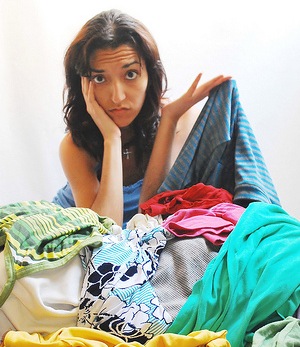
    Even winning the lottery produces only short-term ecstasy, for lottery winners are no happier 18 months after their win than non-winners. And I suspect there are many readers of this blog who have stuff in their wardrobes that they once thought was to-die-for that they now wouldn’t be seen dead in.

    Hedonic adaptation explains the tide of over-consumption that modern society is caught up in. If we didn’t ‘go off’ things, if last year’s handbag or winter coat thrilled us as much today as when we bought it, we wouldn’t be drooling over this year’s model. The exhilaration of acquisition gives buyers such a buzz that, like shopping junkies, they seek it out again and again. 
    How did I ever love this lot?
    We all know we should be content with less. We know that twenty pairs of shoes is more than enough for any bipedal creature. But the pull of the mall does, as I said in an earlier blog, threaten to make shopping zombies of us all.

    How can we stop this adaptation and prolong the pleasure of our purchases, or our priveleges? What can the field of fashion psychology tell us? Research about to be published in the Personality and Social Psychology Bulletin points to two key ways. Appreciation and variety. In their hedonic adaptation prevention model the authors say:
    Appreciation: Stop and appreciate every day what you have and you might be able to eek more excitement from it.
    Variety: Use it in different ways, to create more varied experiences, and the bliss could persist.

    Why? Because the brain habituates over time that we get bored with things*. The brain loves novelty and surprises, which is why the mantra I swear by, Do Something Differentis once again of huge relevance here.

    How? Here are my tips for preventing hedonic adaption and keeping the thrill alive:
    • Move stuff around so you continue to notice it.
    • Re-position your art or objects of desire in the home every so often so they have new impact.
    • Store winter clothes away in summer, and vice versa, and experience the newness of them when you get them out again months later.
    • Ditto with young kids’ toys. Divide them into four storage containers. Let them play with one set at a time while the others are hidden. Rotate on a weekly or monthly basis.
    •  Better still, stop buying toys and use a toy library or swap with friends. Babies habituate very quickly to stuff and love more novelty than even the most indulgent parent can afford.
    • Keep an appreciation or gratitude journal. This trick, from positive psychology, keeps reminding you of the good stuff in your life. It's shown to boost happiness as well as curbing the urge to go and buy more stuff.
    • Get excitement from experiences rather than from purchases. The effects are known to last longer and be more fulfilling. Very relevant at Christmas.
    • Use your old stuff in new ways, learn how to restyle your old clothes or swap with friends.
    • Rent, rather than buy, an outfit for a special occasion.
    • Do something different as often as possible in your life.  You’ll come to see that it’s all about what you do, not what you have.


    ·      * From the paper by Sheldon et al, University of Missouri:
    "By definition, adaptation occurs only in response to constant or repeated stimuli, not to dynamically varying ones. Thoughts and behaviors that are varied and unexpected or surprising appear to be innately stimulating and rewarding. Stated differently, after an individual completely understands and expects the experiences that a change produces, the experiences will no longer have the same emotional impact and he or she will drift back towards his or her initial wellbeing. Maintaining the variability and surprises inherent in the experiences and in the emotions forestalls this process… One applied implication of this view is that many people cope with their HA to their prior purchases and acquisitions by overconsuming and overspending. However, if they can continue to derive pleasure from what they already have, in part from varied experiences of those possessions, then they can resist increasing aspirations for even more."

    The Challenge of Staying Happier:
    Testing the Hedonic Adaptation Prevention (HAP) Model
    Kennon M. Sheldon, University of Missouri & Sonja Lyubomirsky, University of California, Riverside
    in press, Personality and Social Psychology Bulletin


    Friday, 16 July 2010

    Does it matter which hand you pay with?

    Last week Simonne and I were fortunate enough to hear Paul Lewis of Radio 4’s Moneybox Live speak at the Financial Services Research Forum. As well as being well-informed and an engaging spekaer as you’d expect, he also had this good tip on debt.
    It was that the debt shouldn’t last longer than what you’re buying.

    So if you go into debt to cover Christmas, it should be paid off within 12 months. Borrow for a holiday and make sure you’ve cleared the debt before the next trip away. Go into debt for a pair of shoes but only for as long as they’re in fashion. This would be, he joked, about two weeks. We have to take issue with him there!

    My own talk to the forum was about left and right brain processes. Afterwards Paul passed on to me a delightful little Do Something Different tip that he said he came up with years ago. It’s this.

    Pay with the opposite hand.

    Not only will this feel different, it might affect your conscious experience in another way. The right hand connects to the left brain hemisphere and the left hand to the right. Since the left is more logical/thinking and the right more intuitive/feeling, will this make a difference? Who knows, but it’s worth a try. 


    Also scientists have shown that generally people associate the right side with positive concepts, life and all things good and the left with negativity and death. But in left-handers it's the opposite, which suggests it's not a cultural norm but a personal one. 


    So left-handers are an interesting example of conceptual associations resulting from sensory-motor experience. According to this theory, left and right handers should feel less positive when paying with the opposite hand.

    If you try it, let us know how it felt. Just don’t drop those sale shoes while trying to get out your credit card with the wrong hand. Some quick right hander could have them away before you can say 'short fashion fix'!